
Common Reasons Solar Permit Applications Get Rejected
Introduction

Every delayed solar permit means delayed installations, unhappy customers, and lost revenue. Whether you’re a solar installer, EPC contractor, or engineering team, permit approval is one of the most critical stages of every solar project.
Unfortunately, many solar permit applications are rejected on the first review not because the installation is impossible, but because the submitted plans contain avoidable errors, missing information, or code compliance issues.
Most Authorities Having Jurisdiction (AHJs) review permit plans carefully to ensure every solar PV system meets local building codes, fire safety regulations, and the National Electrical Code (NEC). Even a small mistake can result in permit comments and additional revisions, delaying your project by days or even weeks.
In this guide, we’ll explain the most common reasons solar permit applications get rejected, how to prevent them, and how professionally prepared permit plans can significantly improve first-pass approval rates.
Why Solar Permit Approval Matters
A solar permit is more than paperwork it’s a safety and compliance requirement.
A complete and accurate permit package helps:
- Ensure electrical safety
- Meet NEC requirements
- Comply with local AHJ regulations
- Reduce revision requests
- Speed up project approvals
- Keep installation schedules on track
Submitting an incomplete or inaccurate permit package often leads to unnecessary delays and increased project costs.
1. Incomplete Permit Documentation
One of the most common reasons for permit rejection is submitting an incomplete application.
Many applications are missing:
- Site Plan
- Single-Line Diagram (SLD)
- Structural calculations
- Equipment specification sheets
- Roof layout
- Label schedule
- Electrical calculations
How to Avoid It
Create a checklist before submission to verify that every required document is included.
2. Errors in the Single-Line Diagram (SLD)
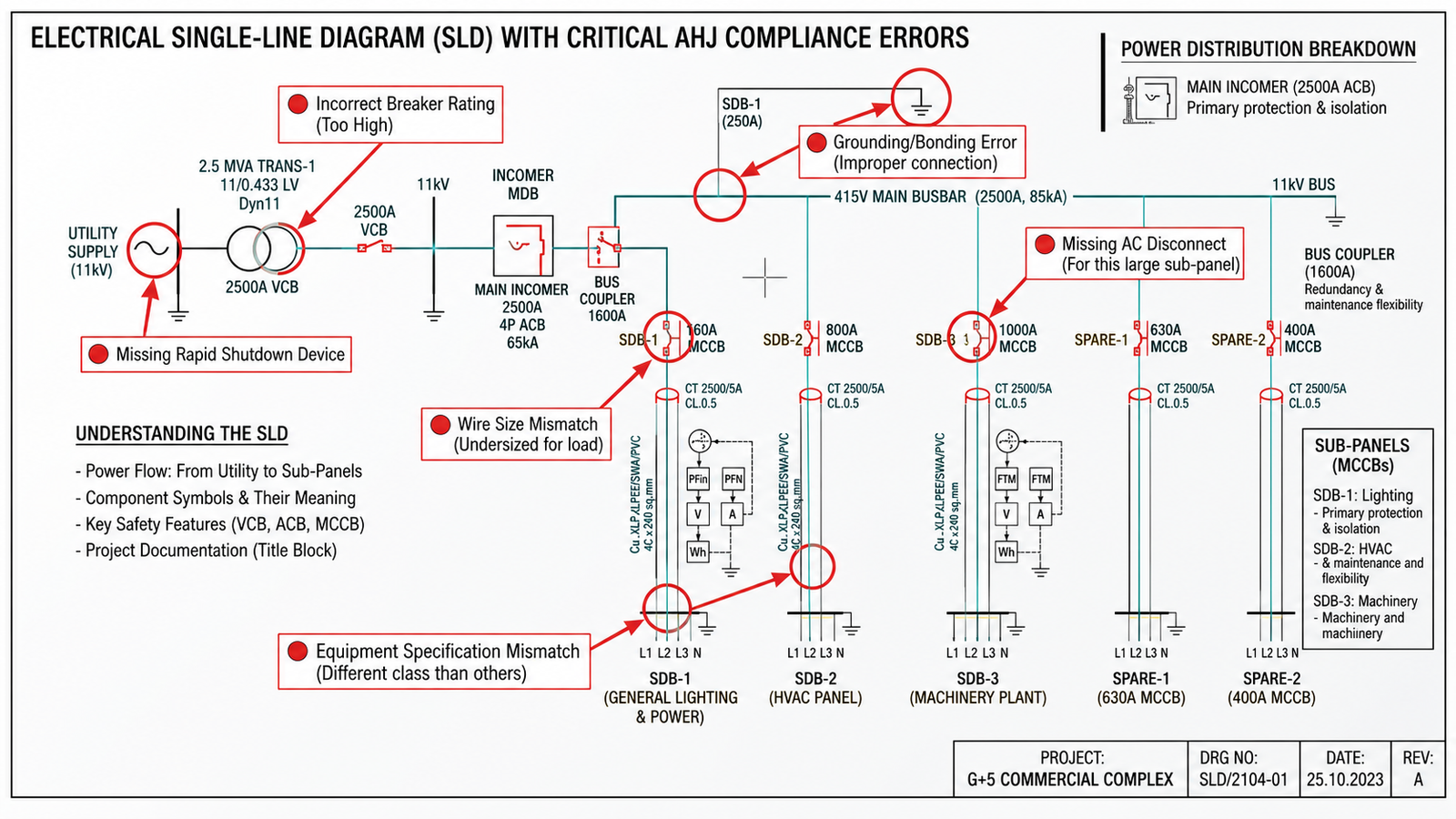
The Single-Line Diagram is one of the most heavily reviewed drawings in a permit package.
Common SLD mistakes include:
- Incorrect wire sizing
- Wrong breaker ratings
- Missing disconnects
- Incorrect inverter configuration
- Missing rapid shutdown equipment
- Grounding errors
These issues frequently result in AHJ correction comments.
Best Practice
Ensure your SLD is accurate, readable, and fully aligned with the equipment being installed.
3. NEC Code Compliance Issues
One of the biggest reasons permit applications are rejected is failure to comply with the National Electrical Code (NEC).
Common violations include:
- Improper conductor sizing
- Incorrect overcurrent protection
- Grounding and bonding issues
- Missing rapid shutdown components
- Incorrect labeling
- Improper equipment placement
Every AHJ carefully checks these items during plan review.
Best Practice
Prepare permit plans using current NEC requirements and local jurisdiction standards.
4. Inaccurate Site Plans
The Site Plan must accurately represent the property and installation.
Common mistakes include:
- Incorrect property dimensions
- Missing setbacks
- Incorrect utility meter location
- Missing disconnect locations
- Wrong equipment placement
Even small layout inconsistencies can delay approval.
5. Roof Layout Issues
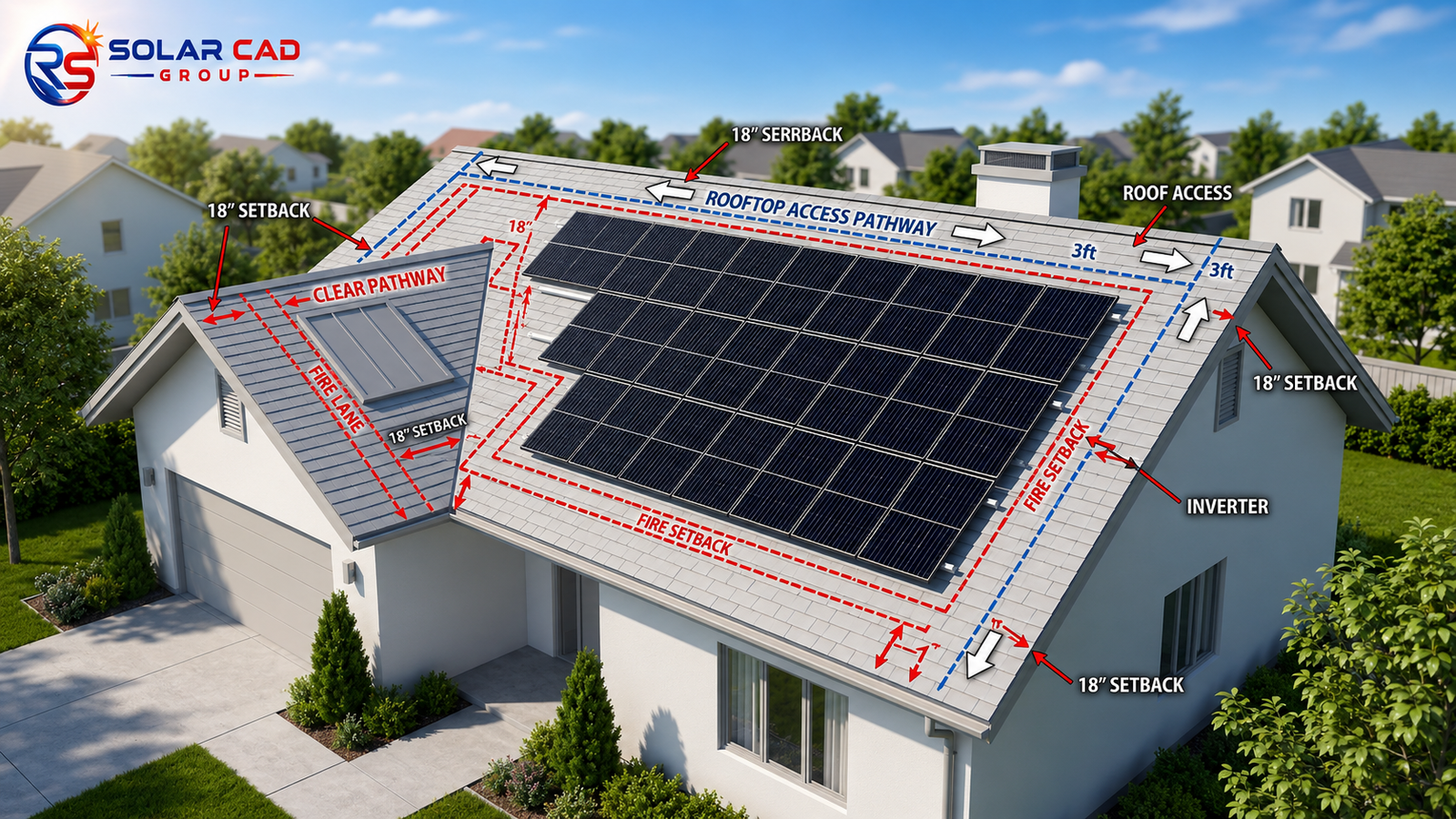
Roof plans are often rejected because of:
- Missing fire setbacks
- Incorrect module spacing
- Obstructed access pathways
- Missing ridge clearance
- Panels installed too close to roof edges
Many jurisdictions follow strict rooftop access requirements.
6. Equipment Specification Mismatches
Another common problem occurs when equipment shown on drawings does not match submitted specification sheets.
Examples include:
- Different inverter models
- Incorrect battery model
- Wrong module wattage
- Missing manufacturer data sheets
All submitted equipment must match across every document.
7. Incorrect Electrical Calculations
Permit reviewers verify calculations such as:
- Voltage
- Current
- Conductor ampacity
- Breaker sizing
- Voltage drop
- Busbar calculations
- Load calculations
Calculation errors often lead to multiple correction requests.
8. Missing Required Labels

NEC requires several safety labels throughout the installation.
Missing labels may include:
- Rapid Shutdown Label
- PV System Label
- AC Disconnect Label
- DC Disconnect Label
- Warning Labels
- Battery Labels
Incorrect labeling is one of the easiest mistakes to avoid.
9. Structural Information is Missing
Many jurisdictions require proof that the roof can safely support the solar system.
Missing structural documents may include:
- Roof attachment details
- Mounting specifications
- Engineering calculations
- Roof framing information
Without structural verification, permits are commonly delayed.
10. AHJ-Specific Requirements Are Ignored
Every AHJ has unique submission requirements.
Some require:
- Additional forms
- Different title blocks
- Utility documents
- Fire department notes
- Local electrical requirements
Using a generic permit template often leads to rejection.
How to Reduce Solar Permit Rejections
Following these best practices can significantly improve approval rates.
Review every drawing before submission
Verify NEC compliance
Double-check equipment specifications
Use accurate electrical calculations
Ensure consistency across all drawings
Include every required document
Review local AHJ requirements
Submit professional permit plans
Benefits of Accurate Solar Permit Plans

Professionally prepared permit plans offer several advantages:
- Faster approvals
- Fewer AHJ comments
- Reduced revision costs
- Improved customer satisfaction
- Faster installations
- Better project scheduling
- Increased business efficiency
Real-World Example
A residential solar project was delayed after the AHJ identified several issues during permit review.
The comments included:
- Battery location too close to a window
- Incorrect disconnect location
- Missing rapid shutdown labeling
- Inconsistencies between the Site Plan and Single-Line Diagram
After revising the drawings to address these issues and ensuring NEC compliance, the permit was approved successfully.
This example highlights how careful planning and accurate documentation can help avoid unnecessary delays.
Frequently Asked Questions (FAQs)
Why do solar permit applications get rejected?
The most common reasons include incomplete documentation, NEC compliance issues, incorrect Single-Line Diagrams, inaccurate site plans, structural omissions, and AHJ-specific requirements not being met.
What is the most common permit mistake?
Errors in the Single-Line Diagram (SLD) and inconsistencies between drawings are among the most frequent causes of permit review comments.
How long does permit approval usually take?
Approval timelines vary by jurisdiction. A complete, accurate permit package generally reduces the likelihood of revisions and helps move the review process more efficiently.
What does an AHJ review during permit approval?
An AHJ typically reviews electrical safety, structural details, NEC compliance, equipment specifications, roof layout, site plan accuracy, and required documentation.
How can professional permit plans help?
Professionally prepared permit plans improve accuracy, reduce revision requests, ensure code compliance, and increase the chances of first-pass approval.
Conclusion
Solar permit rejections are often caused by preventable issues such as incomplete documentation, inaccurate drawings, NEC violations, and inconsistencies between permit documents.
By preparing detailed, code-compliant permit plans and reviewing every submission carefully, solar professionals can reduce approval delays, minimize costly revisions, and keep projects moving forward.
Investing in accurate permit documentation not only saves time but also builds trust with customers and helps maintain an efficient installation schedule.
Need Professional Solar Permit Plans?
At RS Solar CAD Group, we specialize in delivering high-quality solar permit packages designed to meet AHJ requirements and NEC standards.
Our services include:
- Solar Permit Plan Sets
- Single-Line Diagrams (SLDs)
- Site Plans
- NEC-Compliant Electrical Designs
- Solar Proposal Design
- Battery Storage Permit Plans
- AHJ Comment Revisions
- Rapid Turnaround Services
Whether you’re a solar installer, EPC contractor, or engineering firm, our experienced team is ready to support your projects with accurate and reliable solar design solutions.